
Oil-immersed transformers
S13 Oil-immersed distribution transformer
- 6 / 6.3 / 10 kV → 0.4 kV
- 30 – 2500 kVA
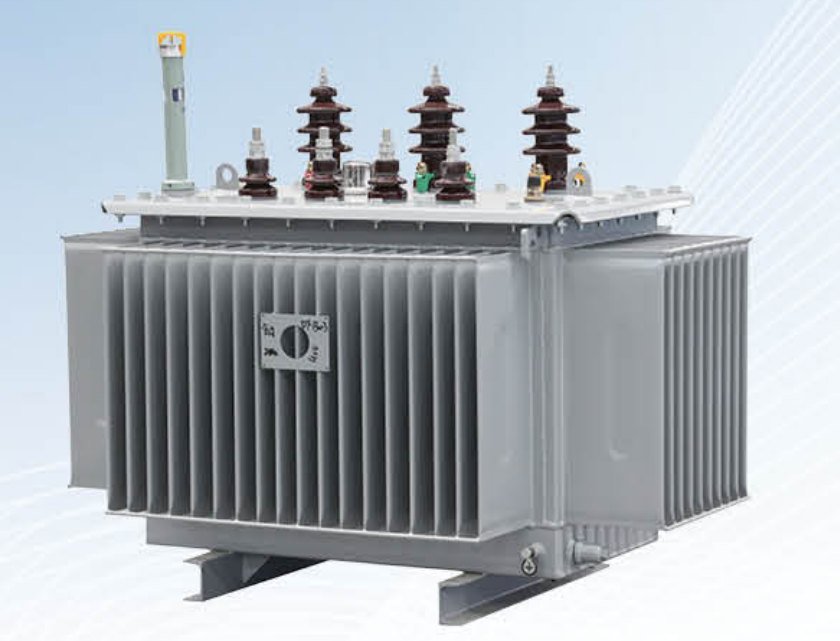
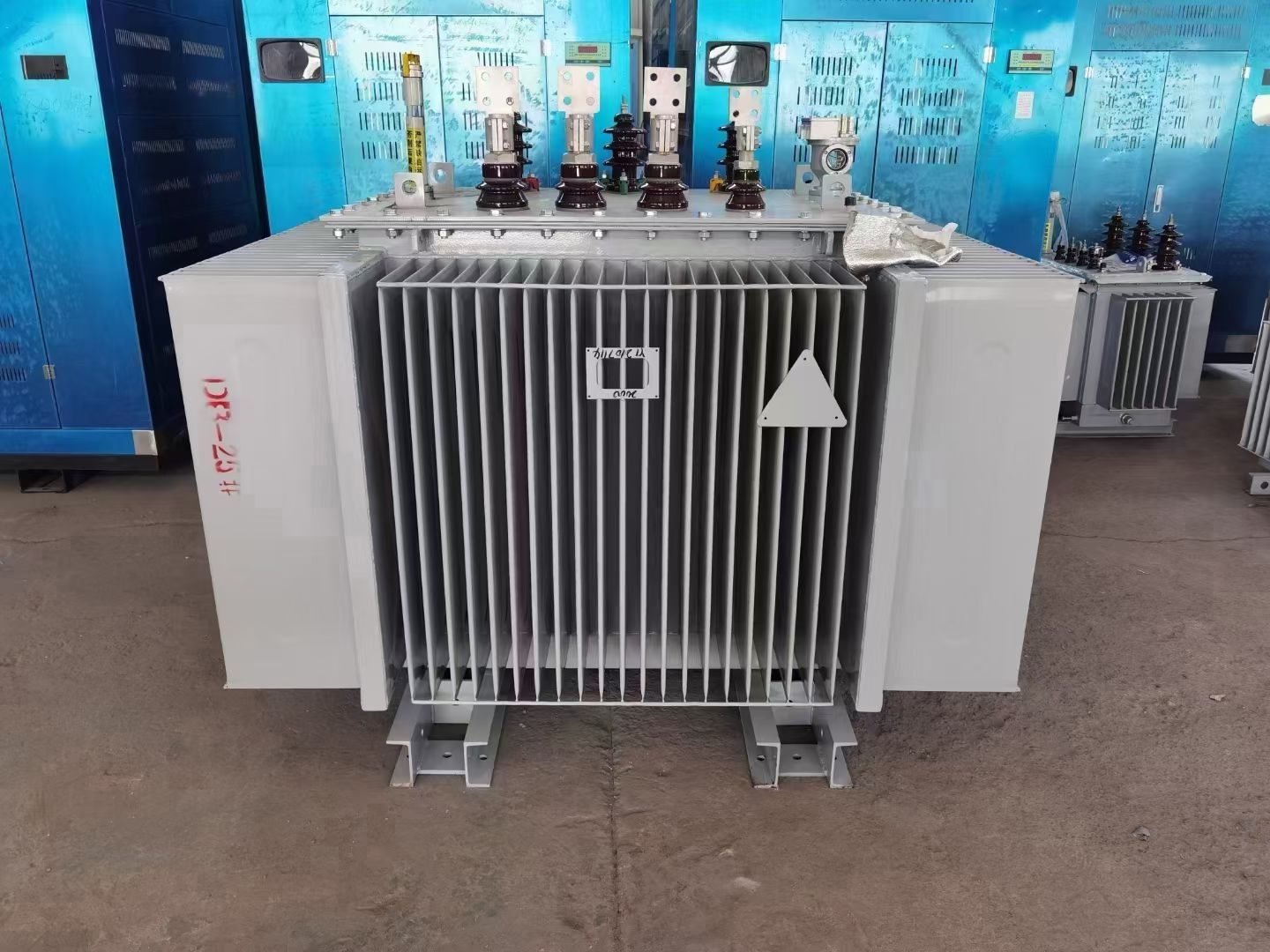
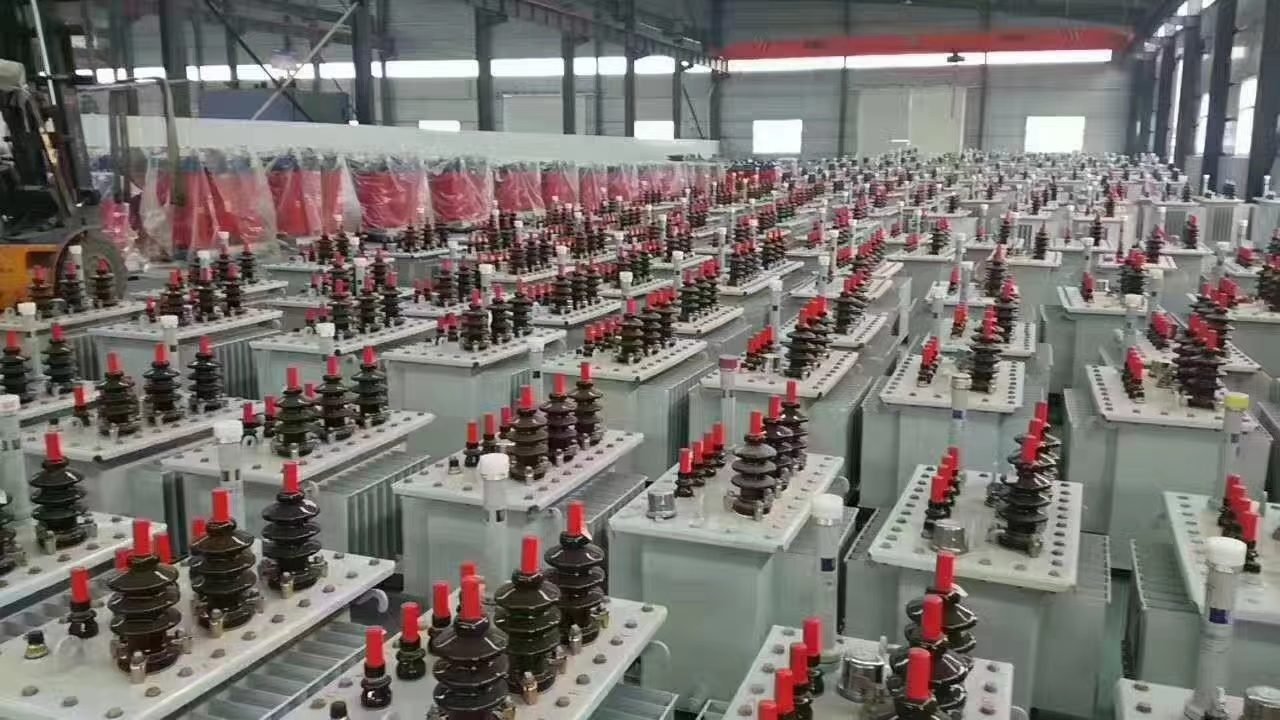
The TMG-160 (factory model S13-M-160) is a hermetic oil-immersed 160 kVA, 10 (6) / 0.4 kV distribution transformer, typically used for mahalla housing, filling stations, small workshops and cold stores. Key figures: 231 A on the LV side, up to 144 kW at cos φ 0.9 and a 200 W no-load loss that runs around the clock. Price and a techno-commercial offer are sent on request within 24 hours.
| Model | S13-M-160 / TMG-160/10/0.4 |
|---|---|
| Rated capacity | 160 kVA |
| HV voltage | 10 / 6.3 / 6 kV |
| LV voltage | 0.4 kV |
| Vector group | Yyn0 or Dyn11 |
| Tapping range (off-circuit tap changer) | ±5% or ±2×2.5% |
| No-load loss | 200 W |
| Load loss (Dy / Yy) | 2310 / 2200 W |
| No-load current | 1 % |
| Short-circuit impedance | 4 % |
| Frequency | 50 Hz |
| Cooling | ONAN |
| Design | Hermetically sealed corrugated tank, mineral oil |
| Standards | GB/T 1094 (IEC 60076), GB/T 6451, JB/T 10088 |
| HV rated current at 10 kV | 9.2 A |
|---|---|
| HV rated current at 6 kV | 15.4 A |
| LV rated current at 0.4 kV | 231 A |
| Active power at cos φ = 0.8 / 0.9 / 0.95 | 128 / 144 / 152 kW |
| Recommended continuous load (70–80 % loading, cos φ = 0.9) | 101–115 kW |
| Three-phase short-circuit current at the 0.4 kV terminals (approx.) | 5.8 kA |
Rated current is calculated as I = S / (√3 · U). The short-circuit current is taken as the LV rated current divided by uk, neglecting the supply network impedance. Network and cable impedance lower the actual current, while the uk tolerance (±10 %) and the IEC 60909 voltage factor can raise it by roughly 10 %, so select the breaking capacity of circuit breakers from the short-circuit calculation of the project.
The amorphous-alloy core of the SH15 cuts the no-load loss by 50 % compared with the S13. For one 160 kVA transformer this saves about 876 kWh per year, because no-load loss is present the whole time the transformer is energised, regardless of the load.
| Parameter | S13-M-160 | SH15-M-160 (amorphous) |
|---|---|---|
| No-load loss | 200 W | 100 W |
| Annual no-load energy loss (8760 h) | 1752 kWh | 876 kWh |
| Load loss (Dy) | 2310 W | 2310 W |
| No-load current | 1 % | 0.6 % |
| Efficiency at 50 % load, cos φ = 0.9 | 98.93 % | 99.07 % |
| Efficiency at 100 % load, cos φ = 0.9 | 98.29 % | 98.35 % |
| Vector group | Yyn0 or Dyn11 | Dyn11 (Yyn0 on request) |
Efficiency is calculated from the catalogue losses: η = P / (P + P₀ + β²·Pk), where P = β·S·cos φ is the output active power and β is the load factor.
A 160 kVA rating is typically chosen for a group of private houses in a mahalla, a filling station, a small workshop or production shop, or a cold store. The unit is usually installed in a separate transformer substation or as part of a compact substation close to the consumers, which keeps the 0.4 kV lines short. The oil is filled into the sealed corrugated tank under vacuum and stays out of contact with the surrounding air.
Size the transformer by the calculated load, taking the diversity factor into account. At 70–80 % loading the TMG-160 delivers 101–115 kW at cos φ 0.9, which leaves headroom for compressor starting currents and seasonal peaks such as summer refrigeration and air conditioning. If the load already exceeds 115 kW, or new houses are planned in the mahalla, take the TMG-250 from the start. If the load fits comfortably within 70–80 % of 100 kVA and no growth is expected, the TMG-100 is enough: an oversized transformer carries a higher no-load loss all year round.
For houses and other single-phase consumers Dyn11 is the preferred vector group. It copes better with unbalanced phase loading and with third-harmonic currents from LED lighting, inverter air conditioners and switch-mode power supplies, and it gives a larger single-phase fault current on the 0.4 kV side, which helps protection operate at the far end of long lines. Yyn0 is the traditional choice where the neutral is lightly loaded, for example in a workshop dominated by three-phase motors. Note that the load loss of the TMG-160 depends on the vector group: 2310 W for Dyn11 and 2200 W for Yyn0.
The choice between S13, amorphous SH15 and the energy-efficient S-M-NX1 depends on the load profile. No-load loss runs all 8760 hours a year regardless of loading, and the SH15-M-160 halves it: 100 W against 200 W for the S13-M-160. For mahalla household load, with an evening peak and low average loading, the SH15 wins on this difference; its load loss equals that of the S13-M-160 in Dyn11 (2310 W). The SH15's standard vector group, and the recommended one for housing, is Dyn11; with a three-phase three-limb core, the Yyn0 vector group can also be supplied on request, so state it in your enquiry if you need it. For a cold store running at high load most of the time, load loss decides, so compare the S13 with the S-M-NX1, which has lower losses of both kinds.
The 160 kVA transformer is also supplied as part of a compact substation: ZGS American-type pad-mounted substation (KTPN), up to 1600 kVA, or YB European-type substation (BKTP / GKTP), up to 2500 kVA. The substation is assembled and tested at the factory, so the site work mainly comes down to setting it in place and connecting the cables.
The TMG-160 (S13-M-160) has an LV rated current of 231 A at 0.4 kV. On the HV side the current is 9.2 A at 10 kV and 15.4 A at 6 kV. The LV figure is used to select the incoming circuit breaker and the cable from the transformer to the switchboard, and the HV figure to select the fuses or protection on the 10 kV side.
At full load the TMG-160 delivers up to 144 kW of active power at cos φ 0.9 (128 kW at cos φ 0.8 and 152 kW at cos φ 0.95). For continuous operation a loading of 70–80 % is usually planned, which gives 101–115 kW at cos φ 0.9 and leaves headroom for motor starting currents and seasonal load peaks.
The price of the TMG-160 (S13-M-160) is given on request only. It depends on the HV voltage, vector group, loss level (S13, amorphous SH15 or S-M-NX1), optional features and the scope of supply, including delivery terms. A technical and commercial offer is sent within 24 hours (one business day) of your enquiry, which you can send via the website form, e-mail sales@lalogo.uz, Telegram or WhatsApp.
Production of the TMG-160 takes 20–35 days after advance payment; delivery to Tashkent by rail or road via Khorgos / Alashankou and Kazakhstan usually takes 15–25 days, on FOB, CIF or DAP Tashkent terms. Each unit ships with a routine test report, passport and operation manual in Russian and English, drawings, packing list and certificate of origin; a statement of compliance with GOST / O‘zDSt is prepared on request.
Whether a TMG-160 is enough for a group of houses in a mahalla depends on the calculated load after the diversity factor, not on the sum of all household ratings. At 70–80 % loading the TMG-160 delivers 101–115 kW at cos φ 0.9, leaving headroom for the summer air-conditioning peak. Choose the Dyn11 vector group for housing, as it copes better with phase unbalance. If new houses are planned in the mahalla or the load already exceeds 115 kW, take the TMG-250 from the start.
The calculated three-phase short-circuit current at the LV terminals of the TMG-160 is about 5.8 kA at the nominal short-circuit impedance uk of 4 % and an infinite (stiff) supply. The uk tolerance (±10 %) and the IEC 60909 voltage factor can raise the real maximum by roughly 10 %, while the impedance of the HV network and cables lowers it. Confirm the breaking capacity of the incoming breaker with the project short-circuit calculation, or choose it with margin above 5.8 kA; checking protection sensitivity needs a calculation that includes line impedance.
Send us the HV voltage, vector group, quantity and delivery point for your TMG-160, and we will prepare a technical and commercial offer within 24 hours.


